
Events
"My Business Is Run By AI": Four Founders on Ideas, Capacity and Where Small Businesses Should Start with AI
9 November 2026 · 5 min read
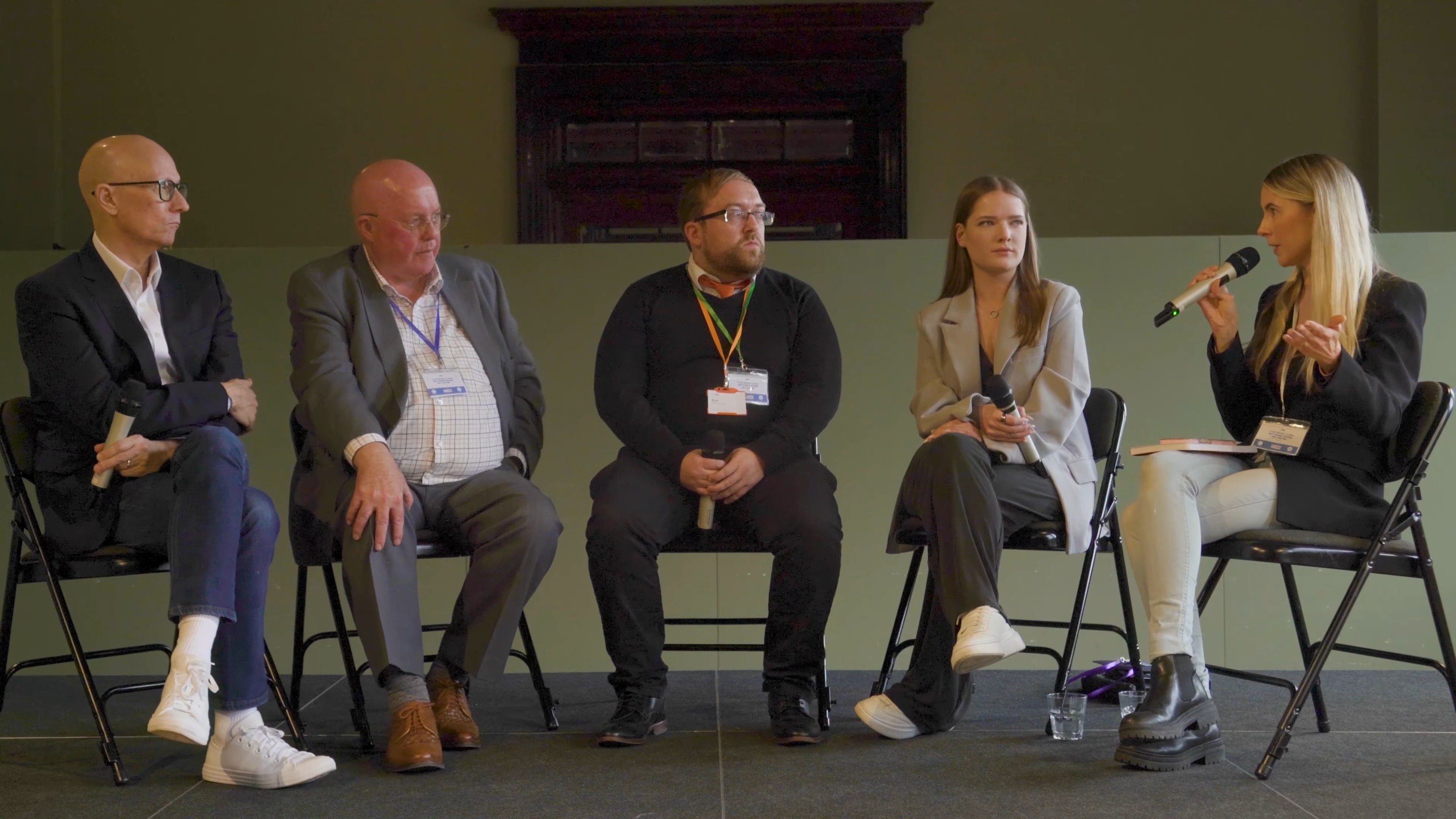
The second live session from our day at the University of Manchester started with a question about what makes a good business idea and ended with a room full of students taking notes on AI agents. In between, it gave one of the clearest pictures we have had on the bench of how AI is being used inside real businesses today, and why not everyone is convinced it will change things as fast as people think.
Host Emma Willett, a marketing freelancer of around ten years who also runs community events, admitted at the start that she would be learning alongside the audience. She was not the only one.
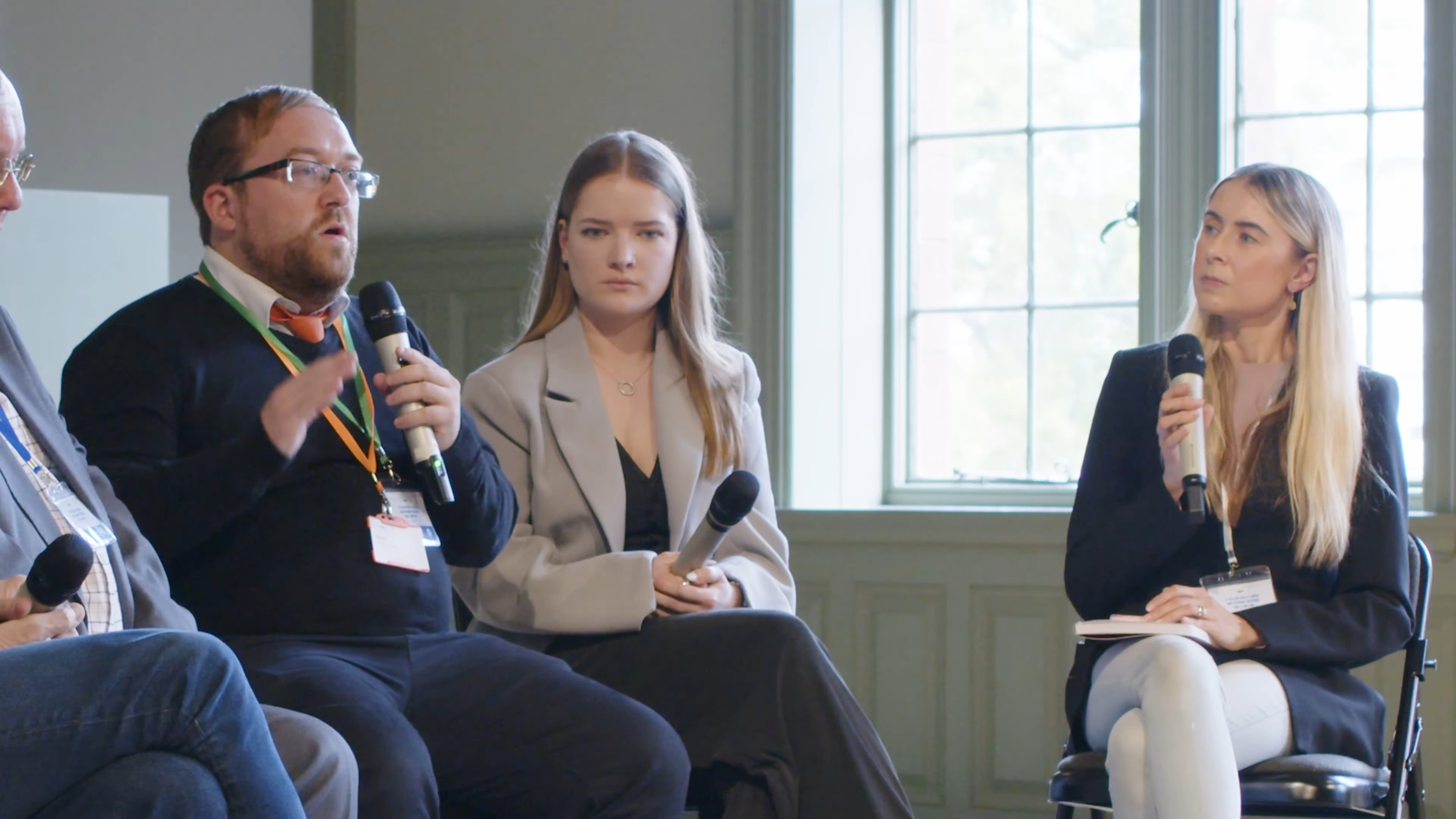
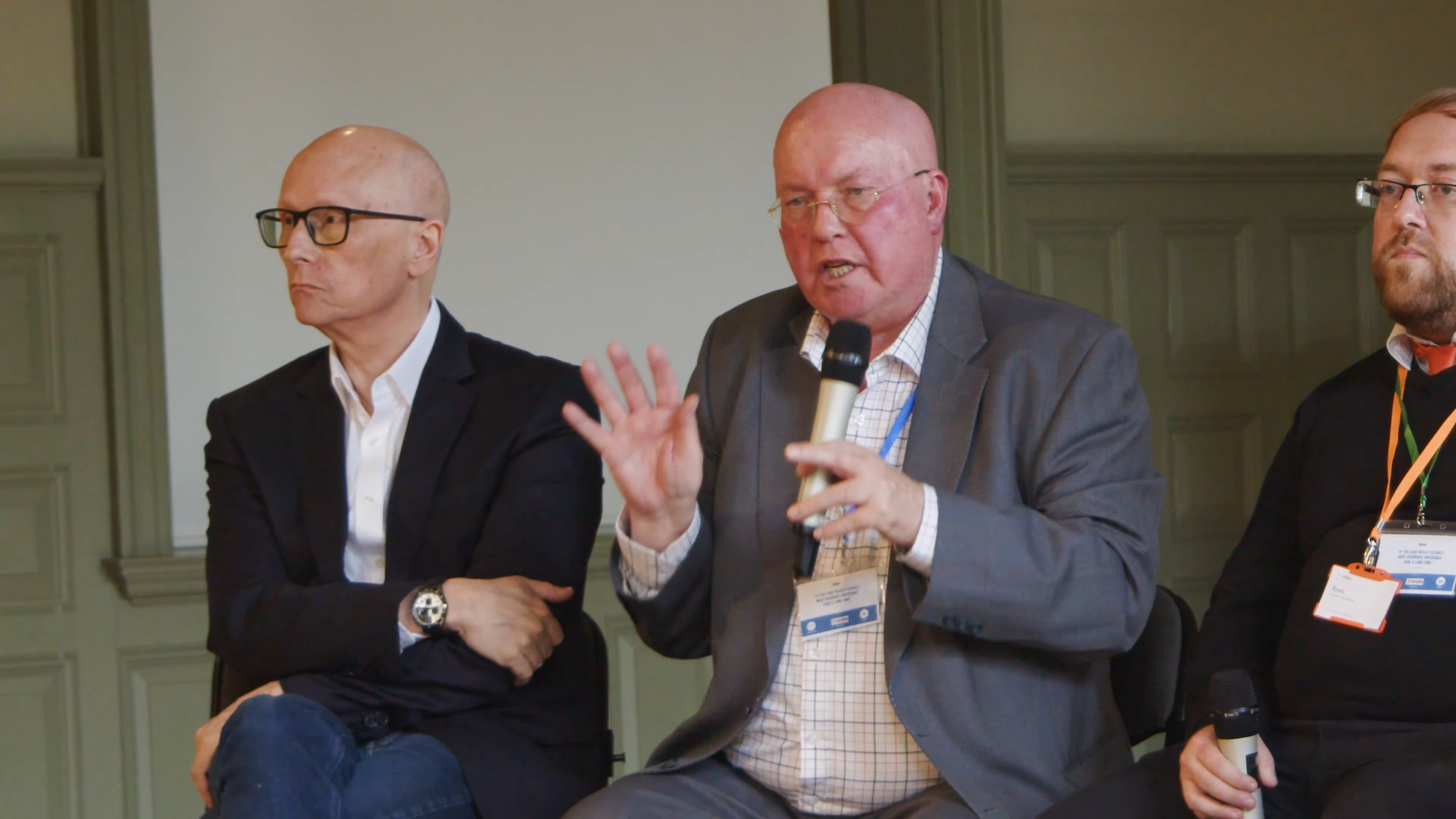
On the bench
Graham Arrowsmith, a data and marketing specialist and host of The Next 100 Days, which he describes as possibly the longest-running weekly business podcast.
Holly Hobbs, co-founder of urfuture, a job app for Gen Z that matches young people to jobs using behavioural science.
Ryan Curran, who spent 12 years in IT and now runs AI-bility, helping businesses across the North West adopt AI.
Perry Offer, founder of Time to Simplify, which helps people and organisations overcome their "inclination to complexity". Time to Simplify also sponsored the episode.
What makes a good idea?
Graham gave the room a framework to remember: "Number one, ICP. Number two, offer. Number three, value proposition." An initial customer profile, an offer that brings that market towards you, and a clear answer to why someone should choose you, which he says always starts with the word "because".
Perry framed it around what customers value: innovation, quality, service, flexibility and lead time, with price as the trade-off against all five. Your proposition, he said, has to speak to the customer's three most important values today, ideally ones that will matter even more over the next 24 months.
Holly was more direct. "A good idea means absolutely nothing without execution behind it and speed," she said. She also urged founders to think early about making an idea "unique and defensible" so it can't simply be copied.
The challenge founders don't talk about
When Emma asked about the first big challenges in business, Holly gave one of the most personal answers of the day. Alongside self-belief, she named something she rarely hears discussed: capacity. Problems with people, a difficult client, criticism online and things going on at home can all land at once. "You have to be able to hold that mentally," she said, "because if you can't... everything falls and breaks."
Her third point was prioritising yourself. She admitted she has always struggled with it, and that when the gym and good food slip, the business suffers too.
Social media is rented land
Graham offered a different view from earlier panels, which had been heavily social-media led. His clients are often looking for high net worth individuals, and he doesn't think they spend much time there. Instead he championed email and direct mail, especially postcards: "It gets to somebody's house. It has their name on. It's not that expensive." He also told the room about creating his first AI digital twin with HeyGen, with some good humour about the accent it gave him.
Emma picked up the point with a saying worth keeping: social media is rented, so build something you own, like an email list.
"My business is run by AI"
Ryan explained that he runs a team of AI agents covering research, client acquisition and outreach. "People think I'm joking," he said. "They generally think my business is run by AI... I absolutely don't [have help]."
He encouraged founders to move beyond the chat window towards agents, skills and shared standards that every agent follows, partly because context is expensive and gets lost in long chats. His most striking example was a client who was openly sceptical: a 35-page onboarding document that took them four days was produced in about half an hour.
Holly shared her own set-up. With no B2B marketing team yet, she runs an AI agent around the clock on a Mac Mini and messages it on WhatsApp to research, send emails and build decks while she is out at events. Her advice for the next five to ten years: get really good at prompting. "We have to get so good at what we're telling the AI so that we get the most out of it."
Why your own data matters
Holly also made a point that resonated with the room. If your business is built only on someone else's AI model, it can be copied. urfuture's matching is built on its own data, starting with around 1,000 hours of interviews with a University of Oxford professor across 18 career categories. "Make sure you have your own data set behind it," she said.
The sceptic's view
Perry was the voice of caution, and the panel was better for it. He uses AI to research and test hypotheses, but is sceptical about how quickly it will transform organisations. "Organisations don't really understand people," he said. "If they did, then 70% of change projects wouldn't fail to achieve their objectives." Layering AI on top of an over-complicated organisation, he warned, will be a struggle.
Where should a small business start?
The closing advice was practical. Ryan: find a process that takes you too long and that you are bored of, and learn AI by automating that one process. Holly: write your processes down and build the context your AI will need. Graham: start with answer engine optimisation so your business gets found and cited. Perry: use it to validate ideas, but "watch out for the flattery and the hallucinations".
Holly had the final word: don't over-rely on it. "If you use every single idea that's on ChatGPT and AI, then anyone can do it."
The takeaway
AI is already doing real work inside small businesses, but the founders getting the most from it are the ones who bring structure, their own data and their own thinking to it. The fundamentals have not changed: know your customer, make a clear offer, execute quickly and look after yourself while you do it.
This was a conversation that could have gone on for hours. Watch the full live episode from Manchester and tell us: would you trust an AI agent to run part of your business?