
Events
Is the UK Still a Good Place to Start a Business? Four Founders on Bootstrapping, Mentors and Knowing When to Stop
9 November 2026 · 5 min read
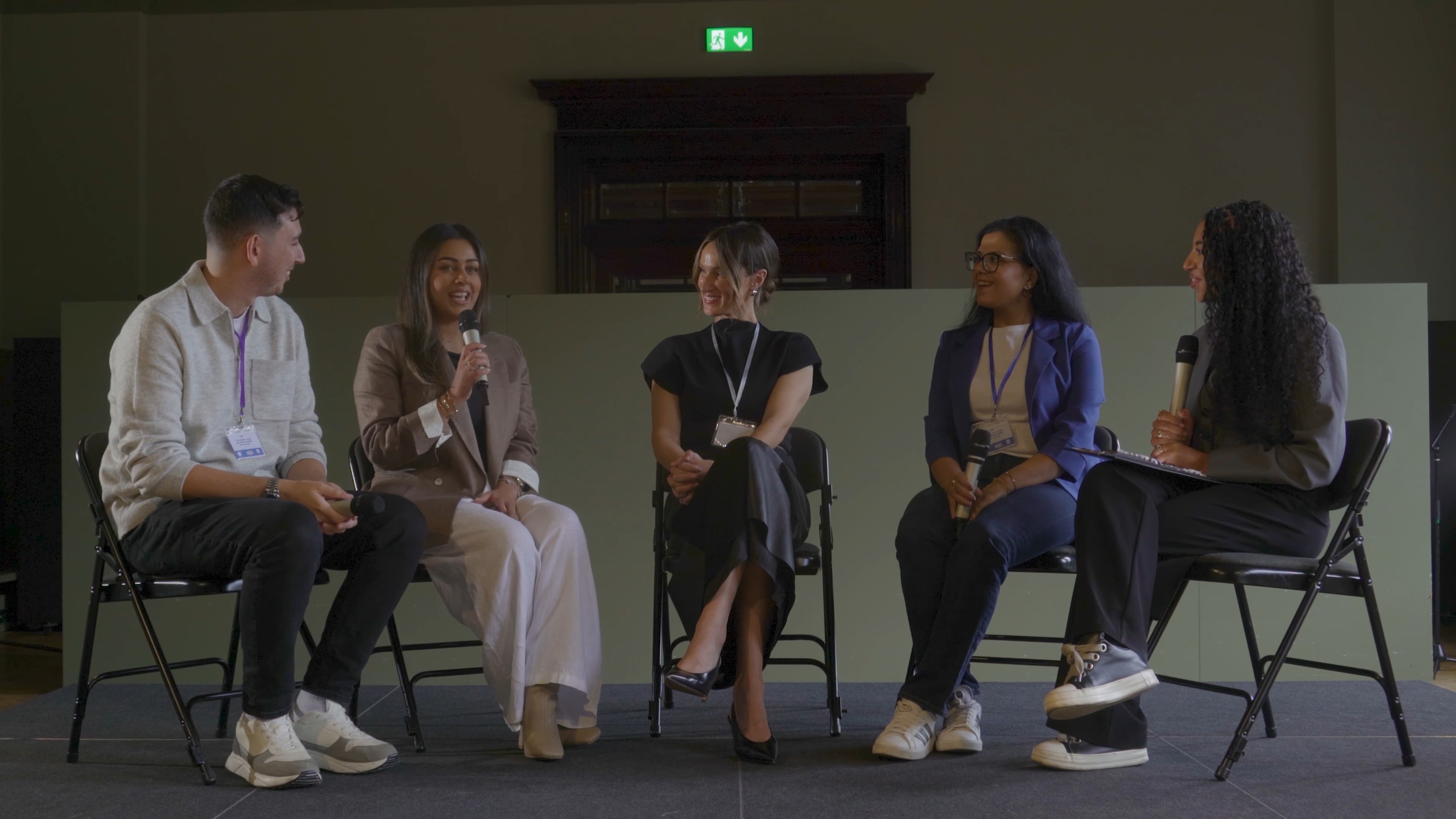
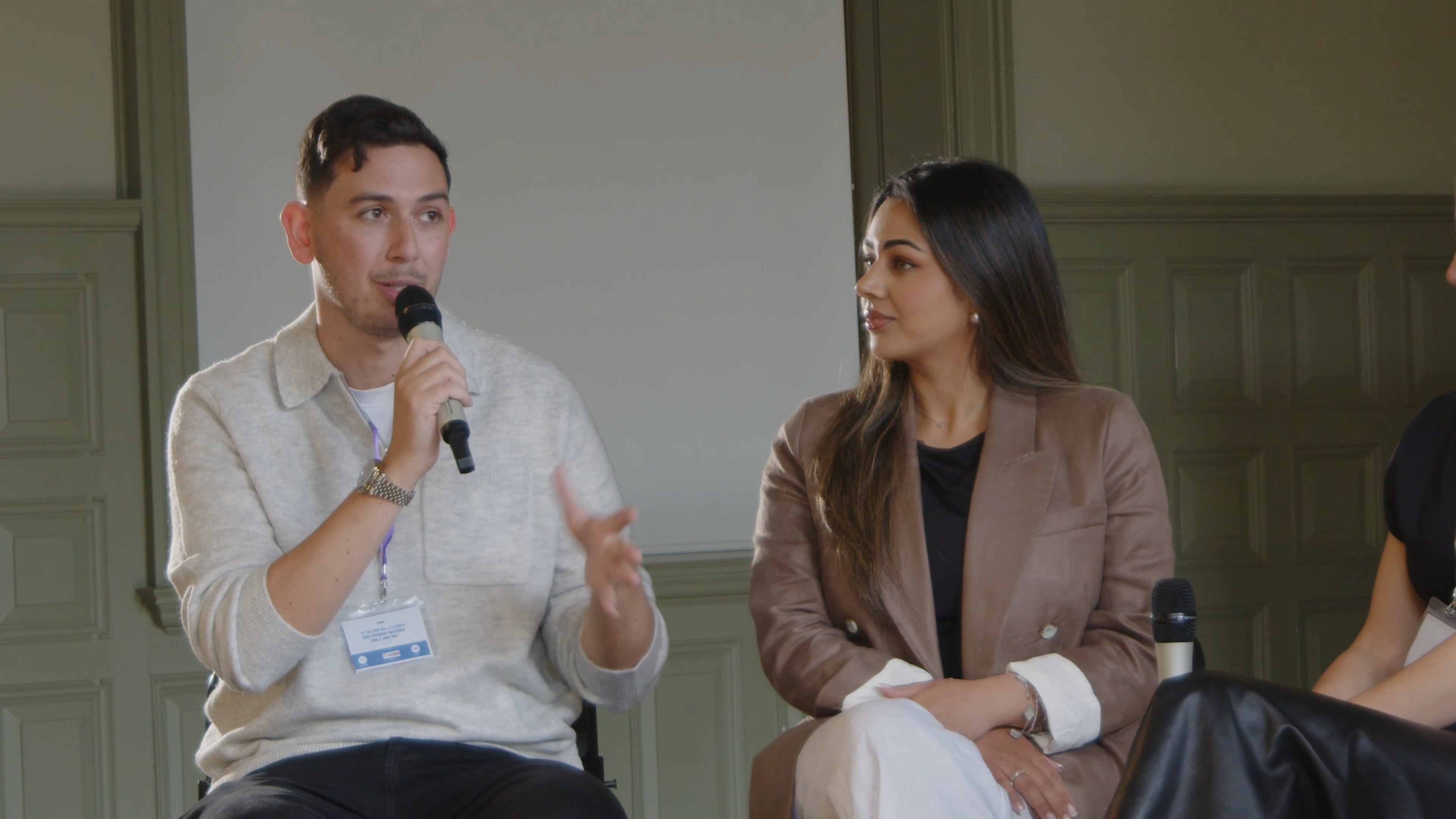
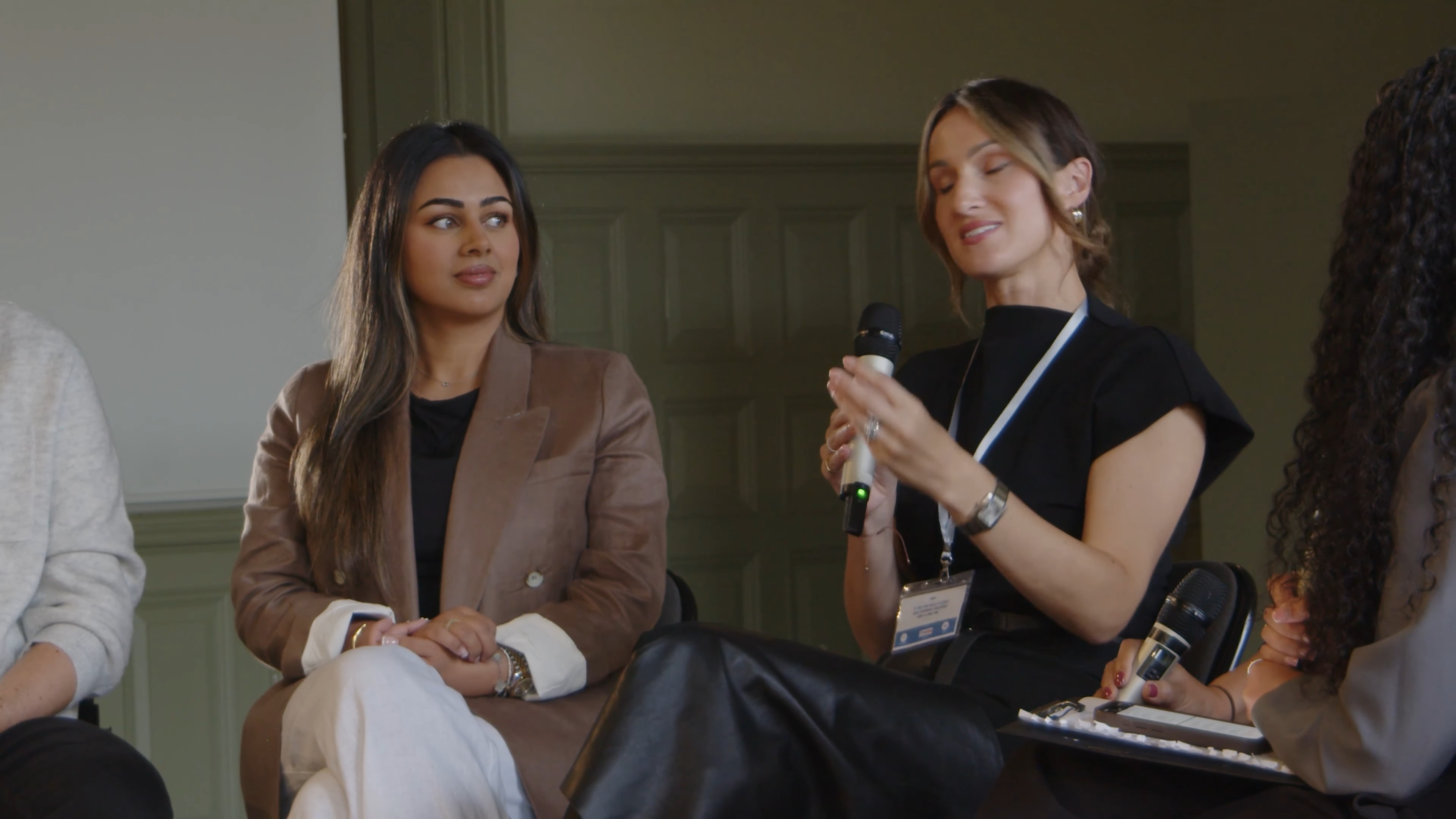
Legacy Bench went on tour for this one. Recorded live at the Whitworth Art Gallery for students at the University of Manchester, it brought together four founders from four very different worlds: baby clothing, bridal makeup, yoga and education. The question on the table was a simple one with no simple answer: is the UK still a good place to start a business?
What followed was one of our most practical conversations yet. Nobody pretended it was easy or that there was one route. Instead they talked about what they had actually done, the mistakes they had paid for, and the advice they would give a student thinking about going it alone.
On the bench
Conor Jaafari, founder of Cozy Crew Club, a direct-to-consumer baby clothing brand that had its first seven-figure year last year.
Fatima Ahmed, known to most people as Cara Makeup, a bridal makeup artist for 13 years and founder of an academy in Manchester.
Chrissie Whittingham, founder of Yoga Social Club, which began as one class in a community centre and is now licensed to 30 venues across the UK.
Falguni Patel, a serial entrepreneur and keynote speaker, founder of Professional Home Tuition Services, who last year set up her seventh business in startup mentoring.
The conversation was hosted by Molly Ann Kennedy alongside our host, with the audience joining in throughout.
Does a degree shape a founder?
For Conor it was a full-circle moment: he studied his marketing master's at the University of Manchester, which taught him "all the basics about product placement, pricing, all the four Ps."
Chrissie studied theatre and performance, Falguni biochemistry and microbiology, and Fatima criminal law at Salford before starting makeup the moment she finished. "I was so happy that I went to university," she said. "It gave me the confidence. It shaped me as a person."
Chrissie summed up the panel's view: "I don't think you should think of that as that is my path. I think you can think what are some key elements of that I've learned that can be applied to any sector."
Social media, community and the lonely bits
Falguni was the first to name a challenge people rarely talk about. "I think sometimes it can be quite a lonely journey," she said, and warned students that there will always be naysayers.
Social media came up quickly, and the panel were honest that it powers their businesses. Fatima estimated that "probably 99%" of her clients come from it. Chrissie, who did not use social media at all while she worked in prisons and schools, has a clear way of handling it: "When I'm on social media, I'm at work." She added: "People also love to go, you just think she's an influencer. No, I'm selling."
Conor's challenge was specific: with a customer base of around 95% mums, how would they trust a man who wasn't yet a parent making baby clothes? His answer was to use social media to show how the brand was built. The panel agreed real-life events matter too.
Grants, loans or bootstrapping?
This was where the room really came alive. Chrissie argued that founders are too often pushed towards investment before they have tested anything: "I really do think people have to sell their minimal viable product first." She tested Yoga Social Club for a couple of years before scaling it, starting with simply yoga and a coffee afterwards.
Falguni has never taken investment across seven businesses. "Had I taken out a grant or a loan, I would have been under so much pressure to get it right," she said. She also challenged the obsession with six-figure businesses: "We need to educate people that it's okay to have a small business and just make a job for yourself and then look to expand."
Her advice to students who want to start something is refreshingly hands-on: sell something on eBay or Etsy, or stand in the street handing out leaflets. "You'll realise the amount of rejection you're going to get and it just toughens you up for the business world."
Why every founder needs a mentor
Conor credits a weekly mentor from the baby industry with teaching him "everything there was to know", from safety regulations to fabrics and fit, during a year of fast growth. "It felt like a safe space that I could talk to her about the business," he said.
Falguni, who grew up in her parents' retail business, admitted she wishes she had had one: "My first business, I set up in my 20s, and I made some very expensive mistakes." Mentors, she said, "get you to think differently."
What makes a great product?
Conor said Cozy Crew Club leads with product, especially its bamboo and organic cotton fabrics, but that community has become its edge, which is where the name comes from.
Chrissie drew a sharp line: "I don't think you can build a brand if you've got a weaker product. I think you can sell a product but not build a brand."
Two years and no money: keep going?
Our host posed the hardest question of the day. If you believe in an idea but it has made nothing in two years, should you carry on? The first answer was blunt: "No. As simple as that." The panel pushed for evidence over belief. "Where is the actual factual evidence that people want that product?"
Others offered a softer view. Chrissie suggested it may be "a point to pivot, not completely stop". Falguni reflected that ego can get in the way: "Not all businesses are meant for you... someone else can do it successfully, not necessarily me."
On AI, Chrissie gave one of the most honest moments of the session. After a year of using AI as a strategist for everything, she found she had "lost my own ability to trust my thoughts", and concluded that "the most original thought and the biggest progress comes from not using AI."
The takeaway
The UK is not an easy place to start a business, but this panel showed it is still a place where you can build one. Test before you borrow. Learn every job in your business before you hire for it. Find someone who will ask you hard questions. And be honest with yourself about the evidence, not just the belief. As the panel closed, the simplest advice was perhaps the best: understand your customer, keep things simple, and "learn who you are and the reason you're going into business."
Would you keep running a business after two years without a profit, or walk away? Watch the full live episode and tell us what you think.