
Entrepreneurship & Growth
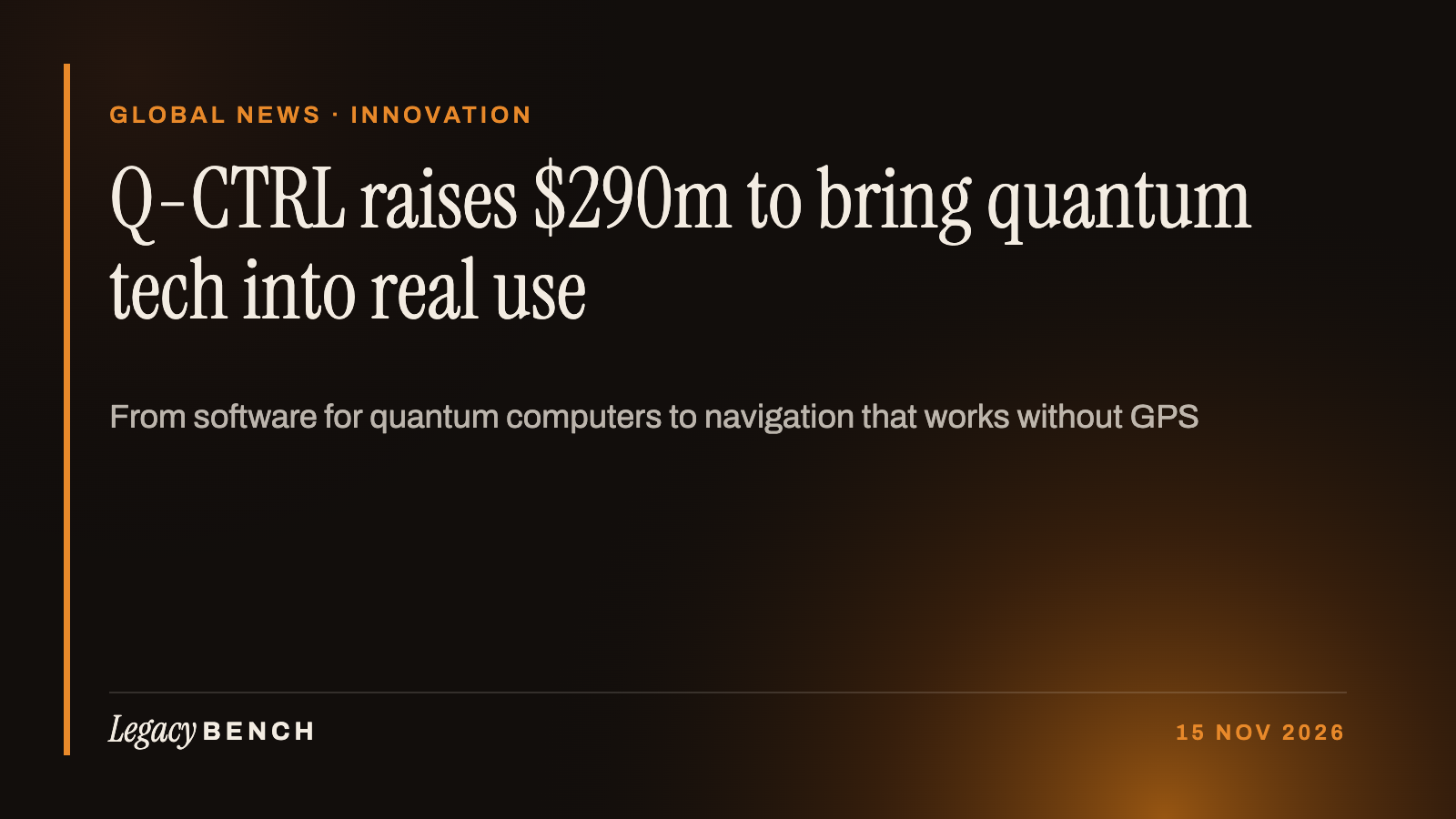
Quantum software firm Q-CTRL raises $290m as quantum navigation moves into real use
15 November 2026 · 2 min read
Quantum technology is often talked about as something that will matter in ten years' time. Q-CTRL's latest funding round suggests investors think parts of it are useful today.
What happened
Q-CTRL announced on 12 November that it has raised US$290m (A$415m) in a Series C round led by Salesforce Ventures. Bullhound Capital and Affinity Partners also played major roles, alongside new investors including AMD Ventures and Australia's National Reconstruction Fund Corporation. The company said the round was oversubscribed, and reports put its valuation at more than $1bn.
Founded in 2017 by chief executive Michael Biercuk, Q-CTRL is based in Sydney and has offices in the US, Berlin and Oxford. It makes software that helps quantum computers work more reliably, by reducing the errors that make today's machines hard to use.
It also builds quantum sensors. Its Ironstone Opal system is designed to help aircraft and vehicles navigate when GPS is unavailable or being jammed, by reading tiny variations in the Earth's magnetic and gravity fields. The company says the system is already being used on commercial aircraft and autonomous vehicles. Robert Keith, a partner at Salesforce Ventures, summed up the investment case: "The hard problem in quantum is not building the machine, it is getting useful output from it."
Why it matters for founders
Q-CTRL is a good example of how deep tech companies earn revenue before their wider field is fully mature. Rather than waiting for perfect quantum computers, it sells software that makes current machines more useful, and it has found a practical use for quantum sensing in navigation, where there is pressing demand.
For UK founders, there are two points worth noting. The UK has strong university research in quantum, and Q-CTRL's presence in Oxford shows that international firms want to be close to that talent. And the focus on GPS-free navigation reflects a growing worry about jamming and spoofing, which affects aviation, shipping and logistics.
What to watch
Q-CTRL says it will use the money to strengthen its software and expand internationally. Watch for new contracts in aerospace and defence, and whether its quantum computing software becomes a standard layer used across different hardware makers. Many claims in this field come from the companies themselves, so independent results will matter.
Sources: