
Entrepreneurship & Growth
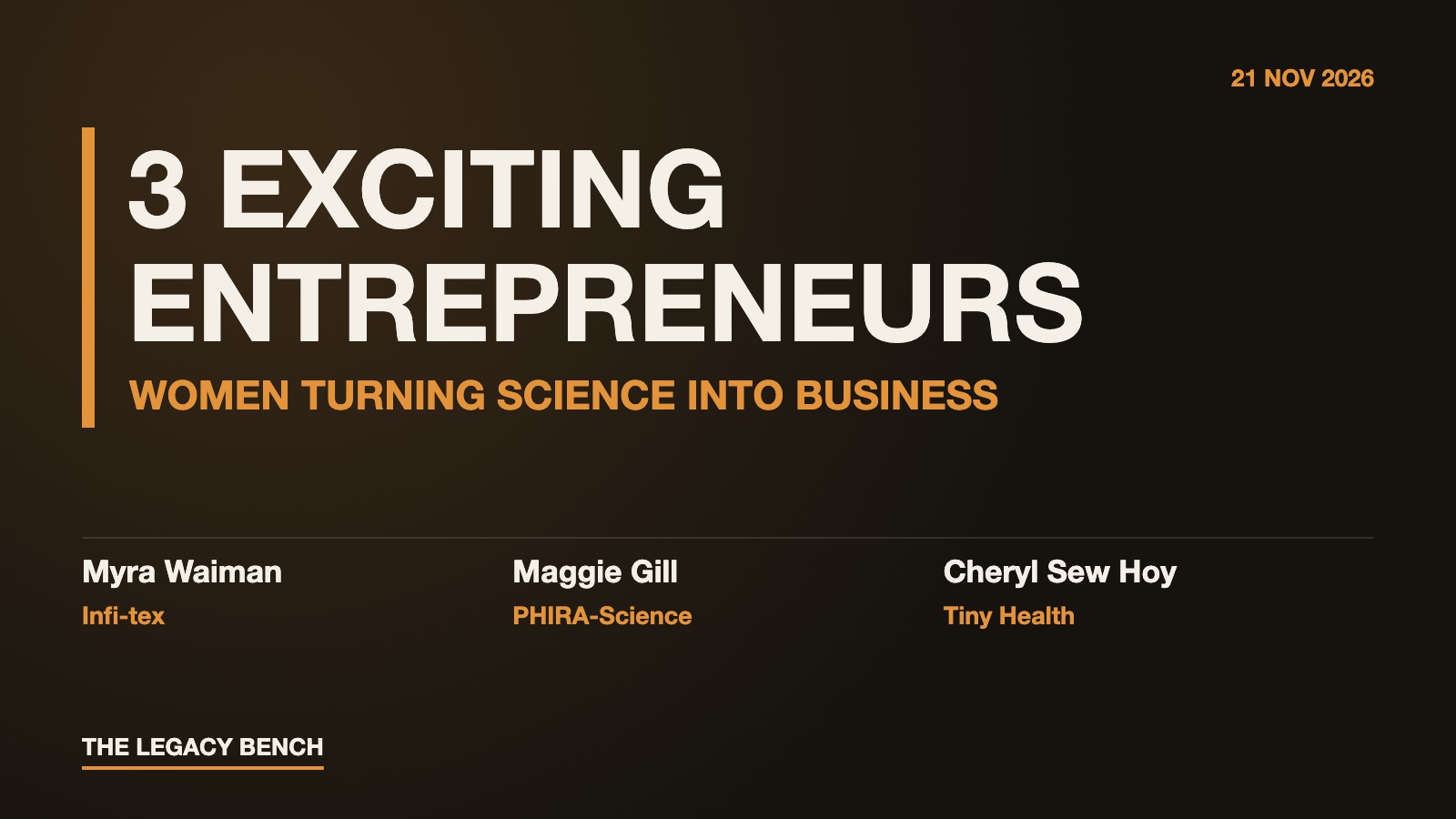
3 Exciting Entrepreneurs: Women Turning Science Into Business
21 November 2026 · 4 min read
This week we are shining a light on three women who are turning careful, science-led work into real businesses. Two of them were named in Innovate UK's 2026 Women in Innovation cohort, announced in August 2026. The third has just closed a major funding round in the United States.
Their fields could hardly be more different: smart fabrics, bee health and the gut microbiome. What connects them is patience. Each is solving a problem that takes time, evidence and trust to get right, and each is proof that you do not need a flashy consumer app to build something that matters.
Myra Waiman, Infi-tex (Lancaster)
Myra Waiman is the founder of Infi-tex, a smart textiles business based in Lancaster in the North West of England.
Infi-tex turns everyday textiles into smart pressure sensors that can detect harm before it happens. Put simply, the fabric itself becomes the sensor, so the material people already sit on, lie on or wear can start collecting useful information.
The recent news: Myra was named in Innovate UK's 2026 Women in Innovation cohort, announced in August 2026, part of a programme backing 100 women who are shaping the UK's future industries. Recognition like this matters for hardware founders in particular, because it opens doors to support, networks and the kind of credibility that helps conversations with partners and customers.
What we like about Myra's story is how ordinary the starting point is. Fabric is something everyone understands. Taking a familiar material and giving it a new job is the kind of idea that can be explained in a sentence, which is a real advantage when you are talking to customers, partners and funders for the first time.
It is a good reminder that some of the most interesting innovation in the UK is happening well outside London. Find out more at infi-tex.com.
Maggie Gill, PHIRA-Science (Carmarthenshire)
Maggie Gill is the founder of PHIRA-Science, based in Carmarthenshire, Wales.
PHIRA-Science is developing a climate-adaptive treatment to protect honeybees from parasitic mites. It is a focused, specialist problem, and exactly the kind of agri-science work that rarely makes headlines but can make a real difference to the people and industries that depend on healthy bees.
Maggie was also selected for Innovate UK's 2026 Women in Innovation cohort, announced in August 2026. Being chosen alongside founders working on everything from health to advanced manufacturing puts a rural Welsh science business firmly on the national map.
Maggie's work is a good reminder that not every founder starts with software or a big consumer audience. Some of the most valuable businesses begin with a researcher who knows one problem better than almost anyone, and who has the patience to see a solution through the long process of testing and proving it.
We could not find a company website to link to, so you can read more about Maggie and the wider cohort in the Innovate UK announcement.
Cheryl Sew Hoy, Tiny Health (Austin, Texas)
Cheryl Sew Hoy is the co-founder and CEO of Tiny Health, based in Austin, Texas.
Tiny Health sells at-home microbiome tests and also runs a business-to-business arm that sells tests through healthcare providers. That two-track model, direct to families and through clinicians, is a smart way to build both reach and trust in a sensitive area.
On 29 September 2026 the company announced a $33m Series B led by B Capital, taking its total funding to $46m. Cheryl says revenue has more than doubled each year, and the company has collected nearly 200,000 microbiome samples, which gives it a growing body of data to learn from.
There is also a lesson in how Tiny Health talks about its progress. Clear, specific numbers, such as total funding, revenue growth and samples collected, make it easier for customers and investors to understand where a company is on its journey. Founders at any stage can learn from being that clear about their own milestones.
For UK founders in health, Tiny Health shows how a consumer product and a professional channel can support each other. Visit tinyhealth.com.
Three founders, three very different problems, and one common thread: each has chosen a problem they understand deeply and stuck with it. If you are building something science-led, these stories show that recognition, support and investment do come, but usually after the patient work has been done.
What founders can take from this
Recognition programmes such as Innovate UK's Women in Innovation can be a real springboard: they bring support, visibility and credibility at an early stage.
Specialist problems are worth solving. A treatment for bees or a sensor woven into fabric may sound niche, but depth beats breadth when you are starting out.
Think about more than one route to market. Selling direct and through professionals, as Tiny Health does, can build reach and trust at the same time.
Want more honest conversations with people building real businesses? Watch The Legacy Bench on YouTube: youtube.com/@thelegacybench.
Sources: